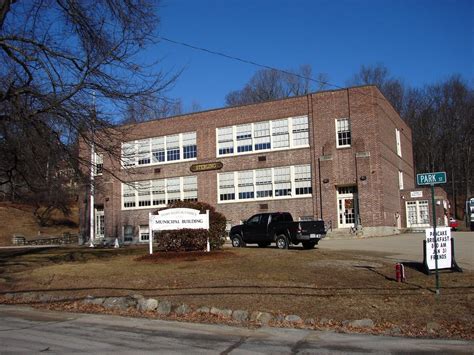
In December 2022 Sterling’s overweening, lying, and corrupt Board of Health snuck through its local regulation requiring septic system “deep observation hole” tests for pre-April 1995 septic systems, applied at the time of property transfer/sale, in outright violation to 310 CMR 15.101, 102 and 310 CMR 15.301, 302.
SEE Part V, sub-part d.:
It had NO legal authority to do so. NO other Massachusetts municipality has adopted such a bogus, ultra vires local regulation so far as we know.
SEE 310 CMR 15.00 (Title V Regulations) effective 7 July 2023– download (mass.gov)
Indeed, 310 CMR 15.302(4) provides as follows:
“(4) Determination of High Groundwater Elevation. A deep hole observation test is not required to determine high groundwater elevation during an inspection. High groundwater elevation shall be estimated by the inspector, using best professional judgment, based on the methods described in 310 CMR 15.302(4)(a) through (c).
(a) The inspector shall review local maps and records of groundwater elevation (previous deep hole observation tests or groundwater monitoring results) on the site and nearby properties, if available.
(b) If the system includes a cesspool, the cesspool shall be pumped during the inspection and then examined to determine whether groundwater flows into the cesspool, indicating that the cesspool is below high groundwater elevation.
(c) If the system includes a septic tank and distribution box, the condition of these components and the surrounding soil shall be observed for indications that groundwater has infiltrated the system. Care should be taken not to destabilize the distribution box or the piping to or from the box. These minimum requirements shall not prevent the use of additional methods. The elevation of nearby water bodies, or evidence of groundwater infiltration in other subsurface structures (for example, cellars), or hand augering to determine depth may aid in determining whether the system is located in the groundwater. The methods used to determine high groundwater elevation shall be described in the inspection report. A system owner may choose to have the high groundwater elevation determined by an observation well or deep hole observation test to confirm or disprove the results obtained by the minimum requirements of 310 CMR 15.302(4), or in place of the minimum requirements”(emphasis added).
Aware of public dissatisfaction with its totally illegal and ultra vires local regulation, the corrupt Board of Health posted this dishonest and deceptive letter on the Town of Sterling’s website, 28 June 2023—
2023_boh_letter_to_public_regarding_septic_test_holes.pdf (sterling-ma.gov)
Compounding its abuse and deception, the corrupt Board of Health, presumably using taxpayer money to do so, had that letter reproduced in the Sterling Meetinghouse News July edition.
YEAH, there has been a “considerable amount of misinformation” circulated about the Board of Health’s recent regulation, ALL of it spread by the lying and corrupt Board of Health itself.
Below is reproduced the email about these matters I sent to the Sterling Town Administrator, with ccs to Board of Health employees and the Town Clerk. It is now a public record (all text is ‘justified’ to left margin for this medium. Apologies for any spacing gaps imposed by this medium):
“Mr. Caldwell,
The following septic system ground water level determination guidance is re-printed from MassDEP’s website. Scrolling all the way down you will see that “Deep Observation Hole” testing, requiring holes dug to 12 feet below grade or 6 feet below the bottom of a leaching field, is the “last resort” in determining high groundwater levels at any particular site. The other listed and approved methodologies are to be employed and exhausted first.
Ground Water Determination
Location of the bottom of the leaching facility compared to the HIGH ground water elevation is the most common reason for the failure of systems inspected. It is also the most important reason that sewage is not adequately treated before it enters the ground water table. For these reasons it is most important that the HIGH ground water elevation be properly determined.
The phrase High ground water elevation is used throughout this section because the ground water elevation can vary significantly throughout the year, from year to year and in different types of soil.
High ground water is defined in Title 5 (310 CMR 15.00) in the definition section (15.002) as follows:
- Inland – The elevation above which in eight out of ten consecutive years the ground water table does not rise. This elevation is commonly but not invariably reached during the months of December through April.
- Coastal – For ground water influenced by tidal action, the average of the monthly spring high tide ground water level as recorded over the most recent consecutive 19 year period.
At the present time the most reliable method of determining the high ground water elevation is to excavate a deep test hole and have it evaluated by a certified soil evaluator. This method is probably beyond a routine system inspection and should be used only in rare cases where there is disagreement among the inspector, the homeowner and the Board of Health and then only after consultation with the homeowner and the Board of Health.
Acceptable methods of estimating high ground water elevation are as follows:
a. READ IT FROM PLANS:
If plans of the disposal system are available they should show the ground water elevation on which the plan was based. Unfortunately, many older systems have no plans available and some have plans that merely recorded the ground water elevation at the time of testing. This may or may not be the HIGH ground water elevation. Be aware of the date these tests were performed, and how that fits into the water year.
b. OBSERVATION ON SITE:
Look for infiltration into the septic tank, cesspool or distribution box…even leaching pits, galley, or chambers if appropriate. Investigate the surrounding soil by the use of hand augers to determine ground water elevation.
c. DETERMINE IT FROM LOCAL CONDITIONS:
Observe the elevation of nearby wetlands; check for ground water elevations on plans for systems located nearby; see if there is a sump pump in the building whose system you are inspecting; look for water marks on cellar walls. NEARBY is of course a subjective word. Be prepared to justify this use.
d. CHECK WITH THE LOCAL BOARD OF HEATLH:
Many towns maintain a network of ground water monitoring wells that show relative ground water elevations.
e. Check with the USDA:
The Unites States Department of Agriculture, Natural Resources Conservation Service often has maps, records and soil surveys, along with knowledgeable staff, which may be helpful in determining high ground water elevation.
f. Check FEMA MAPS:
These flood plain maps, from the Federal Emergency Management Agency can be useful. They are often available from the local Conservation Commission.
g. CHECK, PUMPING RECORDS:
If the system you are inspecting is pumped each spring it is possible this is needed due to high ground water.
h. CHECK WITH LOCAL DIGGERS:
Talk with the local water department and sewer department to learn if they have any first hand knowledge of water depths. Do the same with local excavators and installers, also, gas, telephone and electronic companies.
i. Subscribe to USGS:
Subscribe to USGS ground water records available at their website below.
j. KNOW THE CURRENT STATE OF GROUND WATER
Ground water elevations are recorded monthly by the USGS throughout New England, including over 100 wells within Massachusetts. Examination of the records from these wells shows water elevation changes varying from less than a few feet to more than seventeen feet in a given well. These records are available from: http://ma.water.usgs.gov/
Methods k through n below constitute more invasive means of determining high ground water elevation. This guidance does not suggest that these methods are required in all cases. However, in instances where methods a through h have failed to provide adequate information for determining high ground water elevation, it may be necessary to employ these methods as described below.
k. Small diameter wellpoints can be driven to monitor ground water elevation. Use appropriate adjustments to determine high ground water elevation. This method may not be suitable for all soil conditions.
l. After observing effluent water levels, pump the leaching facility and monitor to see if ground water rises to the bottom (may be more applicable to pits, chambers and galleries than trenches and fields).This approach should be taken with caution. If done during the dry season, the results do not guarantee that subsequent ground water level rise will not inundate the leaching system. Best professional judgment must be used in order to determine at what point backflow into the system is due to ground water infiltration or other factors. Also, in some soils, ground water may take some time to stabilize. In these instances proper precautions must be taken to insure that the open area around the leaching facility is properly secured to prevent injury.
The system owner may choose to have the high ground water elevation determined by the methods described in m and n below to confirm or disprove the results obtained by other methods or in place of the minimum requirements.
m. Drive an observation well with a powered auger, observe the ground water elevation and make appropriate adjustments to determine high ground water elevation. The maximum depth of the well should be twelve feet below grade at the lowest natural elevation on the site or, six feet below the bottom of the leaching facility.
n. Dig a deep observation hole (generally the last resort) and use appropriate adjustments to determine maximum high ground water elevation. The maximum depth of the hole should be twelve feet below grade at the lowest natural elevation on the site or six feet below the bottom of the leaching facility.
THE STERLING BOARD OF HEALTH’S DECEMBER 2022 “DEEP OBSERVATION HOLE” LOCAL REGULATION IS IN CONTRAVENTION OF, AND VIOLATES, MASSACHUSETTS TITLE V SEPTIC SYSTEM REGULATIONS AND MASSDEP GUIDANCE:
The Sterling Board of Health’s December 2022 local regulation requiring “Deep Observation Hole” Testing is set forth as “V. SYSTEM INSPECTION AT TIME OF TRANSFER,” sub-part “d.,” here:
2022-12-08_boh_sds_regs_attested_copy.pdf (sterling-ma.gov)
As you can see, that local regulation violates Massachusetts Title V and MassDEP guidance by requiring “deep observation hole” testing rather than reserving “deep observation hole” testing as the “last resort.”
THE STERLING BOARD OF HEALTH’S 25 JUNE 2023 “LETTER TO THE PUBLIC REGARDING SEPTIC TEST HOLES”:
The Sterling Board of Health has placed this letter on the Town of Sterling website:
2023_boh_letter_to_public_regarding_septic_test_holes.pdf (sterling-ma.gov)
As you can see, the Sterling BOH, by that letter, in blatantly dishonest fashion, misrepresented and misconstrued Massachusetts Title V groundwater level evaluation standards and requirements and MassDEP guidance, AND unilaterally derogated from its own December 2022 local regulation and Title V “Deep Observation Hole” depth requirements by reducing them markedly.
CONCLUSION:
In this matter the Sterling Board of Health has demonstrated its autocratic arbitrariness and capriciousness, its dishonesty, and its incompetence. It is now readily apparent to Sterling residents that Sterling Board of Health members don’t even know the difference between their own asses and holes in the ground.
Sincerely,
James F. Gettens, Esq.”
LIKE A NEGLECTED, UN-PUMPED-OUT SEPTIC SYSTEM, THE STERLING BOARD OF HEALTH IS FULL OF SH*T.
IT’S TIME TO TAKE OUT THESE JACKASSES. LET’S START DURING THE 2024 MUNICIPAL ELECTIONS.
J.G.
 STERLING, MASSACHUSETTS, OVERWATCH
Because of the preponderance of estuaries and embayments on Cape Cod and apparent water quality degradation thereon – Title 5 requirements for Cape Cod were recently revised. However these revisions only took place after an extensive comment period for public input – unlike in Sterling where the DOH mandate was surreptitiously rushed through in an early December meeting that saw no citizen attendance and only two Board members present.
LikeLike